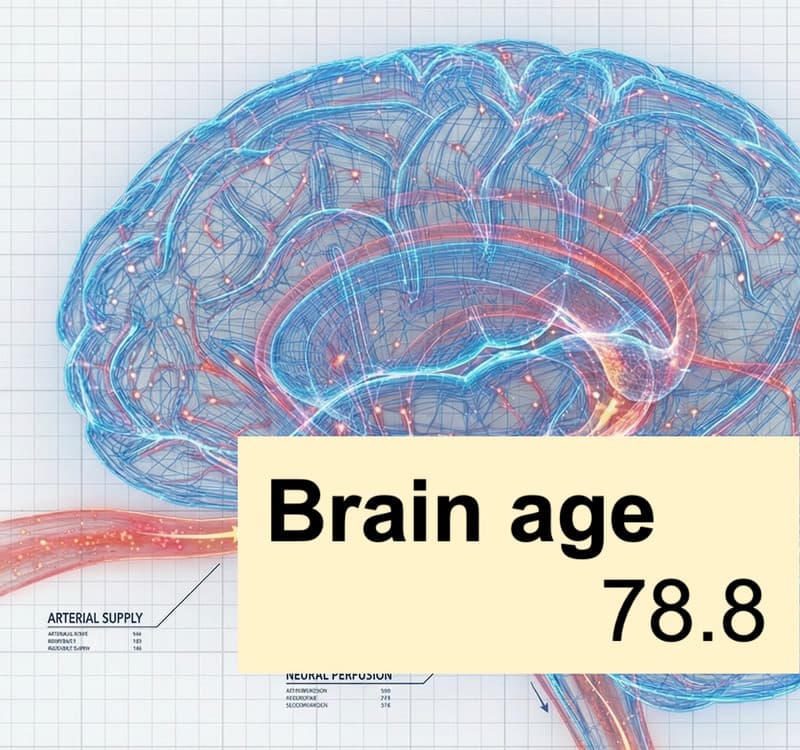
WHAT IS BRAIN AGE?
Your biological brain age vs. your birthdate
Brain age is a measure of how your brain's biological state compares to population norms for your age group. It incorporates structural, functional, and vascular markers to produce a single, clinically meaningful number.
A brain age younger than your chronological age indicates your brain is healthier than average for your demographic — with lower risk of future cognitive decline.
A brain age older than your chronological age signals accelerated aging — typically driven by modifiable lifestyle risk factors that, when addressed, can measurably reverse the trend.
RISK FACTOR ANALYSIS
The 8 factors that shape your brain age
Our assessment evaluates these evidence-based risk factors to calculate your brain age and identify the highest-leverage areas for improvement.
Cardiovascular Health
Blood pressure, heart rate variability, and cardiac output directly impact cerebral blood flow.
Sleep Quality
Chronic sleep deprivation reduces cerebrovascular reactivity by up to 23% and accelerates brain aging.
Physical Activity
Aerobic exercise increases cerebral blood flow velocity and builds cerebrovascular reserve capacity.
Dietary Patterns
Diets rich in nitrates, omega-3s, and polyphenols support cerebrovascular health and slow brain aging.
Stress & Cortisol
Chronic stress elevates cortisol and reduces cerebrovascular reactivity — accelerating cognitive aging.
Metabolic Health
Blood glucose regulation and insulin sensitivity are closely linked to brain vascular function.
Cognitive Engagement
Regular mental stimulation builds cognitive reserve and reduces the impact of vascular brain aging.
Social Connection
Loneliness and isolation are independent risk factors for accelerated brain aging and cognitive decline.
Reversing Your Brain Age: The Lifestyle Blueprint
The human brain retains a remarkable capacity for regeneration — what neuroscientists call neuroplasticity. But this capacity is not unlimited, and it is not passive. It requires the right conditions: adequate blood flow, proper nutrition, sufficient sleep, and meaningful engagement.
What most people do not appreciate is that brain aging is not primarily a genetic phenomenon. Twin studies have consistently shown that lifestyle factors account for over 60% of the variance in brain aging outcomes between individuals with identical genetic backgrounds. The implication is profound: you have far more control over your cognitive future than you may realize.
The interventions that most reliably reverse elevated brain age fall into five categories, each supported by robust clinical evidence: (1) aerobic exercise, (2) sleep optimization, (3) dietary modification toward a Mediterranean-style pattern, (4) stress regulation, and (5) cognitive and social engagement. The good news is that these interventions are additive — their combined effect is greater than the sum of their individual contributions.
Ready to know your brain age?
Take a free self-screening at brainage-screen.com to understand your brain age and identify your key risk factors.
Screen Your Brain Age →